What Is the Best Green Matcha Powder Supplier in China?
Choosing the best Green Matcha Powder supplier in China requires more than comparing prices and attractive product photos. Quality begins with the leaf, but it continues through processing, testing, packaging, and delivery. A reliable supplier should explain where the tea is grown, when it is harvested, and how it is stone-ground. These details matter when the powder must appear bright green, smell fresh, and dissolve smoothly without excessive bitterness.
Real purchasing experience also reveals practical differences. A sample may look vibrant under showroom lighting, yet taste flat in a morning latte. For this reason, buyers should request representative samples, batch specifications, certificates of analysis, and clear storage guidance. Testing should cover moisture, microbiological safety, heavy metals, pesticide residues, and other relevant food-safety requirements. Traceable records strengthen confidence, especially when the powder will enter beverages, supplements, or retail packaging.
The best supplier is not always the largest factory. It may be the partner that answers technical questions clearly and keeps batch quality consistent. Factory audits, production capacity, private-label support, and export experience deserve careful review. Communication speed matters too. Small misunderstandings can affect color, mesh size, or packaging. No supplier is perfect. I would still verify every important claim independently, because polished websites can hide ordinary weaknesses. A thoughtful comparison should balance sensory quality, documented controls, responsible sourcing, and dependable service. That approach creates a more credible answer to the question: which Chinese supplier truly deserves your business?
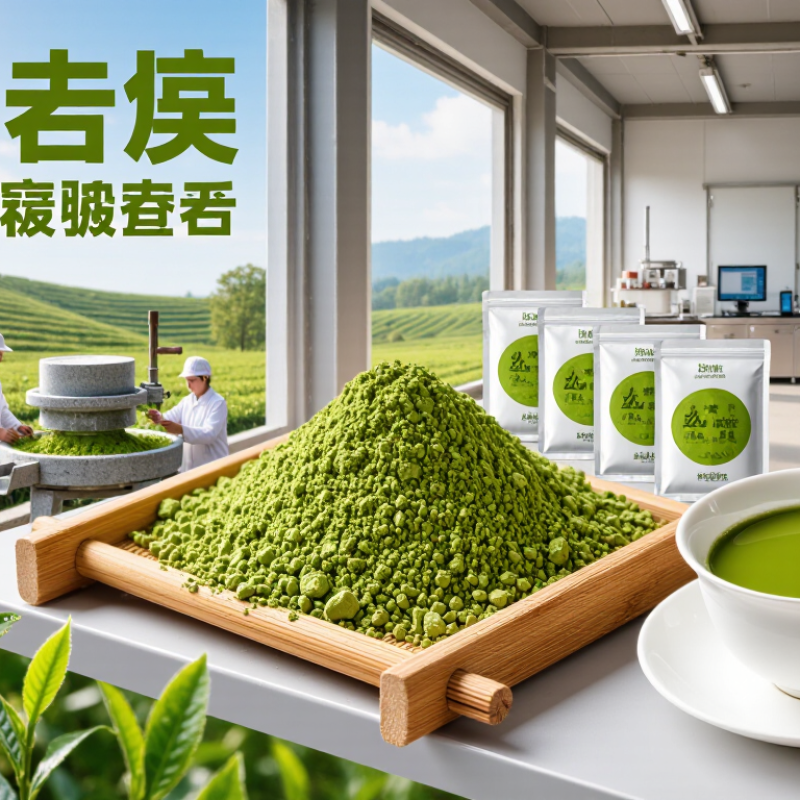
What Defines a High-Quality Green Matcha Powder Supplier in China?
A high-quality green matcha powder supplier in China should provide more than vivid color and competitive pricing. Reliable quality begins with carefully managed tea gardens, preferably using shade-grown leaves harvested at the right stage. The supplier should explain its cultivation methods clearly, including soil management, harvest timing, and drying conditions. Specific answers matter.
Processing also reveals professional expertise. Fine matcha should feel smooth between the fingers, dissolve evenly, and produce a fresh vegetal aroma without a musty note. Stone milling can help create a delicate texture, although equipment alone cannot guarantee quality. Each batch should have a clear production date, lot number, and traceable origin. Small details build confidence.
Independent laboratory testing is essential. A dependable supplier should provide recent certificates covering pesticide residues, heavy metals, microbiological safety, moisture, and other relevant standards. Documents must match the actual batch, not merely show a generic sample report. Ask how samples are sealed, stored, and shipped. Packaging should protect the powder from light, heat, oxygen, and moisture.
Communication is another practical test. A professional supplier responds with precise specifications instead of vague promises. They should discuss particle size, color expectations, packaging formats, and quality tolerances openly. No supplier is perfect. A strong one admits limitations and explains corrective action. I would still request a pilot order, because written claims cannot replace a cup tested in real conditions.
How to Evaluate Matcha Quality, Origin, and Production Standards
What Is the Best Green Matcha Powder Supplier in China?
Choosing a reliable green matcha powder supplier in China requires more than comparing prices. Start with origin records, harvest dates, and clear farm-to-batch traceability. High-quality matcha usually comes from shade-grown tea leaves, which support a vivid color and smoother taste. Ask whether the leaves are processed into tencha before fine grinding. This detail matters.
Look for a supplier that can provide recent laboratory reports for each batch. These reports should cover pesticide residues, heavy metals, microbial safety, and moisture content. Production certificates can help, but they should support real inspection practices, not replace them. Review the facility’s hygiene controls, grinding temperature, packaging process, and storage conditions. A fresh sample should appear bright green, feel exceptionally fine, and produce a clean aroma without a stale, grassy smell.
Taste remains essential.
I once judged a sample by color alone and overlooked its harsh aftertaste. That was a poor decision. A better evaluation includes whisking the powder with warm water, checking foam stability, and observing bitterness after several minutes. Ask for samples from different harvests, because seasonal variation is normal. Reliable suppliers explain limitations openly and provide consistent documentation. They should also answer practical questions about shelf life, inner packaging, export testing, and batch identification without vague promises. Supplier reviews may be useful, but direct evidence carries more weight.
Which Certifications and Testing Reports Should Buyers Request?
For green matcha powder, a certificate is only useful when its scope matches the actual factory and product. Buyers should request a valid ISO 22000 or FSSC 22000 certificate, plus HACCP records and recent audit findings. Check the legal entity, production address, expiry date, and certified product category. An organic certificate must cover the processing site, not only the tea farm.
Testing documents need equal attention. Request a batch-specific Certificate of Analysis from an ISO/IEC 17025-accredited laboratory. It should show the lot number, sampling date, test methods, detection limits, and laboratory accreditation number. “Passed” is too vague. Ask for a full pesticide multi-residue panel, heavy metals, microbiology, and moisture results. Lead, cadmium, arsenic, mercury, Salmonella, E. coli, yeast, and mold deserve clear numerical results. Match the limits with the destination market, including EU Regulation 396/2005 and Codex CXS 193-1995.
EFSA’s 2022 pesticide-residue report examined 110,829 food samples, showing why routine verification matters. Most samples complied, but compliance does not remove supplier risk. I would also request three consecutive batch reports, not one attractive document. Compare the lot number with packaging photographs and traceability records. A certificate proves a controlled system. It does not prove every shipment. This distinction is easy to miss. Supplier explanations should be documented, although paperwork can still hide weak sampling.
How to Compare Chinese Matcha Suppliers, Prices, and Custom Services
Choosing the best green matcha powder supplier in China requires more than comparing a price sheet. Grand View Research’s 2024 market assessment estimates the global matcha market will grow at about 9.8% annually through 2030. China’s scale matters too. The USDA Foreign Agricultural Service’s 2024 China Tea Annual reports national tea production above three million metric tons. However, large tea output does not guarantee refined matcha quality. Ask whether leaves are shade-grown, steamed, dried, and finely milled.
Compare suppliers using identical specifications. Request samples with the same grade, harvest season, origin, and packaging size. Check color, aroma, bitterness, particle consistency, and sediment after mixing. A reliable supplier should provide batch-level certificates for pesticide residues, heavy metals, microbiological safety, moisture, and caffeine. Verify the laboratory and testing date. A certificate without traceability is weak evidence.
Price comparisons should include the full landed cost, not only the quoted kilogram rate. Add milling, testing, packaging, freight, customs, and possible rework. Custom services may cover private-label pouches, tins, sachets, blending, artwork checks, and smaller trial orders. Confirm minimum order quantities and production lead times in writing. A beautiful printed pouch proves little. My own comparison mistake was focusing on unit price before checking yield and color stability. The cheaper powder required more material per serving. That changed the real cost. Supplier audits and retained samples can expose this problem early.