Why Is Gelatin Powder Used in Food Products?
Gelatin Powder appears in foods where texture matters as much as flavor. In a gummy, it helps create a soft, springy bite. In a chilled dessert, it can hold the mixture in a neat slice instead of letting it run across the plate. Food makers also use gelatin to stabilize or thicken certain products, though its effect depends on the recipe and processing conditions.
The ingredient comes from collagen, a protein found in animal connective tissues. It is not a plant-based substitute, so people avoiding animal-derived ingredients should check product labels carefully. Small details matter: gelatin usually needs moisture and suitable temperatures to work well, and too much can make a dessert rubbery. The result is familiar. The process is less visible.
Understanding why Gelatin Powder is used means looking beyond a single function. It can contribute structure, mouthfeel, and stability, but it does not guarantee the same result in every food. Acidity, sugar, fat, and preparation methods can all influence texture. A glossy fruit jelly and a soft marshmallow may both contain gelatin, yet feel completely different. That variation is worth remembering when comparing recipes or packaged foods. Gelatin is useful, not magic; its role is best understood through the ingredient list and the finished product.
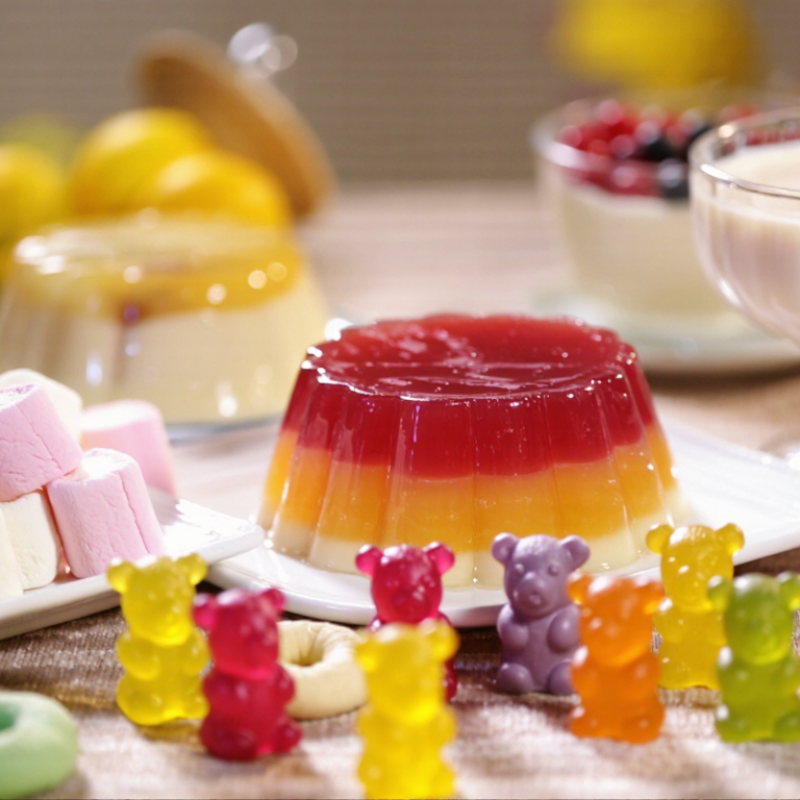
What Gelatin Powder Is and How It Is Produced
Gelatin is a purified protein made by partially breaking down collagen in animal tissues. The FAO/WHO JECFA Compendium of Food Additive Specifications (2006) describes it as a product derived from collagen in materials such as bones, hides, and skins. Production starts with sorting and cleaning these raw materials. They are pretreated, then extracted with warm water. The exact treatment varies with the material and manufacturer. That detail matters.
The extract is filtered to remove solids, concentrated, and dried into sheets or granules before milling into powder. It may look pale and fine, but it behaves differently depending on its gel strength. The Gelatin Manufacturers Institute of America’s Gelatin Handbook reports commercial gelatin strengths commonly spanning 50 to 300 Bloom. Bloom is measured by testing the force needed to press a standard probe into a chilled gelatin gel. It is a useful measure, though not a full description of how gelatin performs in every recipe. A small spoonful can dissolve in warm liquid, then form a soft, springy gel as it cools. Not quite simple. Moisture, acidity, and heating can all change the final texture, so the powder’s label alone may not predict the result.
How Gelatin Behaves When Mixed with Food
Gelatin changes food by building a soft protein network as it cools. In practice, it needs time to hydrate before it can dissolve evenly. Sprinkle the powder over cool water and let it sit until the grains swell. Then warm the mixture gently, stirring until it looks clear. Don’t boil it for long; excess heat can weaken its setting power. Small steps matter.
Once blended into a warm liquid, gelatin spreads through the mixture. As the food chills, its proteins connect and trap some of the liquid, creating a tender gel. A spoonful of gelatin in fruit juice can make a slice hold its shape, while a little more may produce a firmer bite. Sugar, acidity, and the amount of liquid can all affect the result, so a recipe may need adjustment. Cold fruit mixtures can also set unevenly if gelatin cools before it is fully mixed.
Texture is the useful part, but it is also easy to misjudge. A dessert may look set in the bowl and still soften on a warm plate. I find that testing a small batch is more dependable than trusting appearance alone. It takes extra time. And sometimes the result is softer than expected, which is a reminder that kitchen conditions vary.
Why Food Producers Use Gelatin Powder
Food producers use gelatin powder because one ingredient can solve several texture problems. In chilled desserts, it forms a smooth gel that holds its shape but softens pleasantly in the mouth. In yogurt-style products and confectionery, it can add body, stabilize foam, and reduce separation. That flexibility matters on production lines, where a small change in temperature or mixing time can alter the final texture. Small details matter.
Gelatine Manufacturers of Europe’s industry overview estimates that food uses account for about 60% of global gelatin applications. This helps explain its broad role, from gummy sweets to mousses and some dairy products. Producers value its performance at relatively low concentrations, but results depend on the recipe, bloom strength, hydration, and process conditions. Gelatin is not a universal fix. Too much can make a dessert rubbery; too little may leave it weak or uneven. Some formulations also need alternatives for dietary or processing reasons, so the ingredient choice deserves careful review.
Tips: Bloom the powder in cool water before adding it to a warm mixture. Stir gently to avoid trapping air, and test the set after chilling. Keep a batch note. Even a brief temperature change can affect consistency.
Which Food Products Commonly Contain Gelatin
Which Food Products Commonly Contain Gelatin
Gelatin appears in more foods than many shoppers expect. The Gelatin Manufacturers Institute of America’s Gelatin Handbook identifies confectionery, dairy foods, desserts, and meat products as common food applications. In gummies and marshmallows, gelatin helps create a springy, elastic bite. In yogurt, mousse, and whipped desserts, it can add body and help hold air or moisture. Look closely at the ingredient list.
It also turns up in gelled desserts, cake fillings, and some processed meats, where it helps bind ingredients or retain moisture. The handbook describes gelatin gels as melting at roughly 25–35°C, though the exact range depends on formulation. That near-body-temperature melt explains the soft, quick-melting texture in some sweets. A useful detail, but not a guarantee: recipes vary, and gelatin may be absent from similar-looking products. The list is not perfectly neat. Some manufacturers use other gelling agents, so checking the label is more reliable than judging by appearance.
Why Is Gelatin Used in Food Products?
Gelatin can form gels, add a smooth texture, and help stabilize foams. The chart shows food categories in which it is used in some formulations—not the share of products that contain it. Recipes vary, so check the ingredient label.
A value of 1 indicates that gelatin is used in at least some products in that category; it does not mean every product contains gelatin.
What Determines Gelatin’s Role in a Food Recipe
Why Is Gelatin Powder Used in Food Products?
What Determines Gelatin’s Role in a Food Recipe
Gelatin’s job depends on the texture a recipe needs: a soft wobble, a sliceable filling, or a firm confection. Its strength matters. The Gelatin Manufacturers Institute of America’s Gelatin Handbook describes commercial gelatin by Bloom strength, commonly ranging from about 50 to 300 Bloom. Higher-Bloom gelatin can form a firmer gel at a lower concentration, though the final result also depends on the recipe. A chilled dessert served in small cups needs a different set than a cake filling that must hold clean edges.
Concentration, hydration, acidity, sugar, and heating all affect performance. Sprinkle powder over cool liquid and let it swell before warming; undissolved grains can leave a gritty mouthfeel. Strong acidity or prolonged heating may weaken the gel, while extra sugar can change how firm it feels. Serving temperature matters, too. A recipe can set neatly in the refrigerator, then soften on a warm counter. There is no perfect formula for every kitchen.
Tips: Check the package’s Bloom strength when adapting a recipe. Weigh gelatin rather than relying on spoonfuls, and test a small batch if the fruit, acidity, or serving conditions change. A slightly softer set may be preferable to a rubbery one.