High Pressure Water Pump Buying Guide for Global Buyers?
When considering purchasing a water pump high pressure, understanding the market is crucial. The global high pressure water pump market is projected to grow significantly, with a CAGR of 6.2% from 2021 to 2028, according to a recent industry report. This growth is driven by increasing demand in sectors like agriculture, construction, and industrial processes.
Experts in the field emphasize that knowledge is vital for buyers. John Smith, a leading authority in water pump technology, remarked, "Choosing the right high pressure water pump can make or break your project." This underscores the importance of selecting the right equipment tailored to specific needs. Potential buyers should assess factors such as pump efficiency, durability, and support services from manufacturers.
Additionally, the industry faces challenges. Not all pumps are created equal. Inconsistent quality and performance can lead to project delays and increased costs. Prospective buyers must rigorously evaluate their options. Conducting thorough research will yield better purchasing decisions and long-term satisfaction with the product.
Key Considerations When Purchasing High Pressure Water Pumps
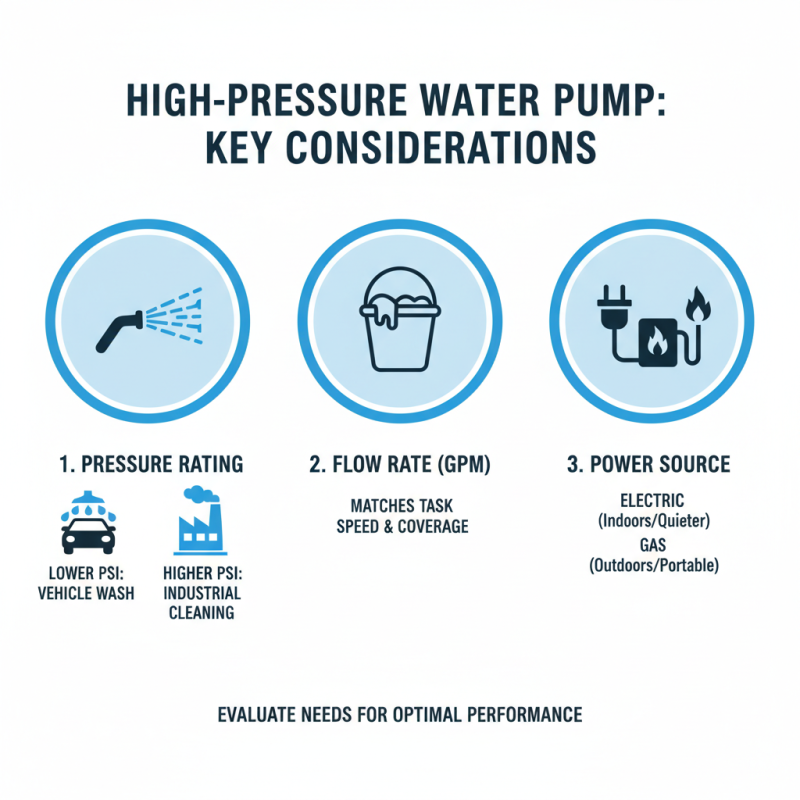
When considering the purchase of a high-pressure water pump, several key factors must be evaluated. One important aspect is the pump's pressure rating. It should match the specific needs of your tasks. For instance, if you require a pump for washing vehicles, a lower pressure may suffice. However, for industrial cleaning, a higher rating is essential.
Another vital consideration is the flow rate. This is how much water the pump can deliver in a given time. Depending on your usage, you might need a model with a higher flow rate. Additionally, assess the pump’s build quality. Materials that resist corrosion and wear extend the life of the pump significantly.
Ease of maintenance is often overlooked but crucial. Pumps with easily accessible components simplify repairs and reduce downtime. Look for designs that accommodate regular upkeep without complex disassembly. These aspects might seem minor, but they impact the overall efficiency and longevity of the pump. Choosing the right one requires careful evaluation and reflection on your specific needs.
Types of High Pressure Water Pumps: An Overview
When considering the types of high-pressure water pumps, it's essential to understand their distinct functions and uses. High-pressure pumps can be categorized into rotary, centrifugal, and diaphragm pumps. Each type serves specific applications in various settings.
Rotary pumps are known for their efficiency in moving thick liquids. Centrifugal pumps excel in transferring large volumes of water rapidly. Diaphragm pumps are vital for handling corrosive fluids.
Tips: Always consider the material of your pump. This can greatly influence longevity. Be cautious about mismatched materials, as they can lead to failure.
Different projects may call for different pump types. If you’re dealing with agricultural irrigation, for instance, a centrifugal pump would likely be your best choice. Conversely, for industrial cleaning applications, consider a diaphragm pump for its reliability.
Tips: Assess your water source and desired pressure. Understand the needs of your project before purchasing. Do not rush into a decision; take the time to gather information from reliable resources.
Factors Influencing Pump Performance and Efficiency
When selecting a high pressure water pump, various factors significantly impact performance and efficiency. One important clue lies in the pump's design and materials. The choice of material affects durability and the ability to withstand pressure. Stainless steel pumps often provide better resistance to corrosion, making them suitable for challenging environments.
Another factor to consider is the pump's flow rate. A higher flow rate can mean quicker water delivery but may also lead to inefficiencies if not matched with the required application. Assessing the specific needs for your project is crucial. Pumps with adjustable flow rates offer versatility but might come at a higher cost, which can raise questions about their long-term value.
Energy efficiency is another key aspect. High-efficiency pumps can reduce operational costs but may require a larger upfront investment. Understanding the energy source and its availability can also influence your decision. Make sure to compare the energy consumption rates among models. Regular maintenance and the pump's ease of repair can also impact long-term performance. It's wise to consider the total cost of ownership rather than just the initial price.
High Pressure Water Pump Buying Guide for Global Buyers
| Pump Type |
Maximum Pressure (PSI) |
Flow Rate (GPM) |
Power Source |
Efficiency Rating |
| Centrifugal Pump |
1500 |
40 |
Electric |
85% |
| Diaphragm Pump |
1200 |
25 |
Gasoline |
78% |
| Submersible Pump |
2000 |
30 |
Electric |
80% |
| Piston Pump |
2500 |
15 |
Hydraulic |
90% |
| Gear Pump |
1600 |
35 |
Electric |
82% |
Understanding Pump Specifications and Technical Ratings
When selecting a high pressure water pump, understanding specifications is crucial. Key metrics include flow rate, pressure rating, and power consumption. The flow rate indicates how much water the pump can deliver per minute. It's typically measured in gallons per minute (GPM) or liters per minute (LPM). For instance, a pump with a higher GPM is suitable for larger tasks, like irrigation or washing.
Pressure ratings, measured in PSI (pounds per square inch), clarify the pump's capability to move water under pressure. A higher PSI suggests stronger performance for delivering water to higher elevations or through long hoses. Additionally, power consumption is significant; a more efficient pump can save energy and reduce costs over time. However, too much pressure can cause damage to piping systems, leading to leaks or bursts.
Buyers should also consider the build quality and material of the pump. The longevity of a pump might depend heavily on these factors. Users may sometimes overlook maintenance requirements, which can lead to reduced efficiency. Reflecting on these aspects can help ensure a better purchasing decision. It's essential to balance performance with durability to avoid future headaches.
Tips for Comparing Brands and Models in the Global Market
When comparing high pressure water pumps in the global market, buyers should focus on key performance indicators like flow rate, pressure rating, and energy efficiency. A recent report from the International Pump and Valve Association states that pumps account for nearly 20% of global energy consumption. Efficiency ratings can tip scales considerably in operational costs.
Understanding the specifications can be daunting. Many brands use differing measurement standards, making it hard to compare directly. For instance, some manufacturers rate their pumps under ideal conditions, while others do so under real-world scenarios. Additionally, noted research from the Global Water Association indicates that suboptimal pump selection can lead to a 15% increase in energy costs annually.
Another essential element is material quality. Pumps made from durable materials may exhibit higher initial costs but can lead to cost savings over time through reduced maintenance needs. Trade reports suggest that more than 30% of pump failures are due to material degradation. Buyers may struggle to find reliable data on longevity and maintenance, and understanding these factors is crucial for making informed decisions.
High Pressure Water Pumps Performance Comparison