Top Tips for Choosing the Right Pressure Pumps for Your Needs?
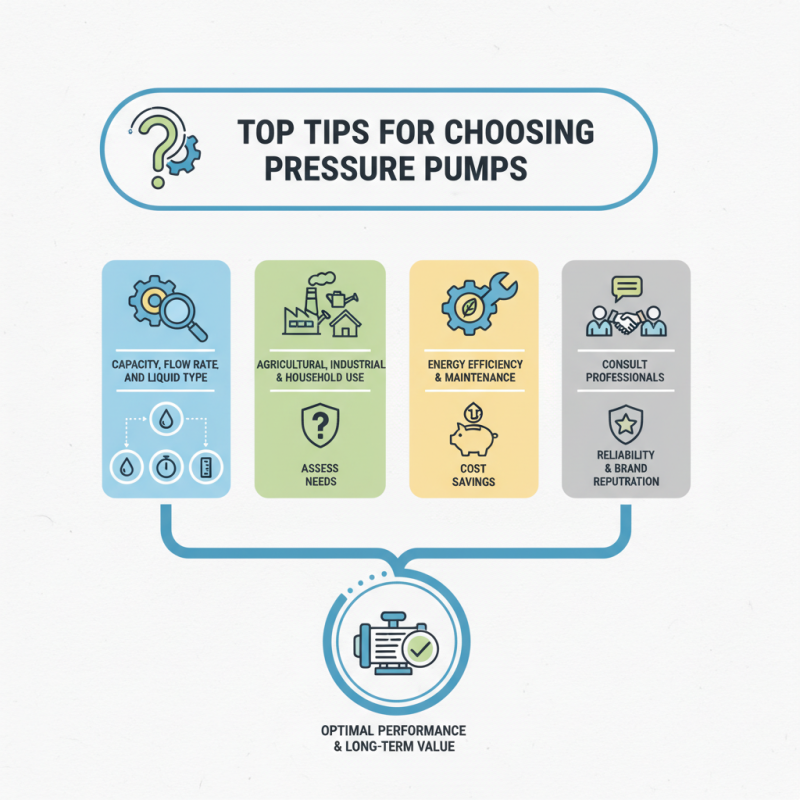
Choosing the right pressure pumps can greatly impact your productivity and efficiency. Whether you need pumps for agricultural purposes, industrial applications, or household use, understanding your specific needs is essential. A well-chosen pressure pump can ensure optimal performance and durability.
When selecting pressure pumps, consider the capacity, flow rate, and type of liquid to be pumped. Each project comes with unique challenges. What works for one task may not suit another. It's crucial to assess your requirements thoroughly. Don't overlook features like energy efficiency and maintenance needs. Investing time in research can save costs down the line.
Moreover, always consult with professionals or experienced users. Their insights can help you avoid mistakes and make informed decisions. Ask questions about reliability and brand reputation before purchasing. The right pressure pump should not only meet your needs but also provide long-term value. This careful approach can lead to successful outcomes in your projects.
Understanding the Different Types of Pressure Pumps Available
When selecting a pressure pump, it’s essential to understand the different types available. Centrifugal pumps are common for transferring fluids. They offer smooth operation and high flow rates. This makes them suitable for agricultural and industrial applications. However, they may not generate high pressure, which can be a drawback in certain situations.
Another option is the positive displacement pump. These pumps are known for their ability to create high pressure, making them ideal for tasks requiring forceful fluid movement. They can handle thick liquids well. Still, they may require more maintenance, which some users might overlook.
Submersible pumps often operate underwater and are useful for drainage tasks. They can be cost-effective but might not be efficient for continuous use. Understanding these differences helps align your needs with the right pump type. Selecting the wrong pump can lead to inefficiencies. Always consider your specific requirements and usage conditions when making a choice.
Top Tips for Choosing the Right Pressure Pumps for Your Needs
| Type of Pressure Pump |
Best Use Cases |
Flow Rate (GPM) |
Max Pressure (PSI) |
Power Source |
| Centrifugal Pump |
Irrigation, General Water Transfer |
10-120 |
20-100 |
Electric |
| Positive Displacement Pump |
Food and Beverage, Chemical Transfer |
5-50 |
30-150 |
Electric or Pneumatic |
| Diaphragm Pump |
Wastewater, Fertilizer Application |
2-30 |
50-100 |
Electric or Air Operated |
| Submersible Pump |
Deep Well Water Extraction, Sump Pumping |
15-200 |
30-250 |
Electric |
| Jet Pump |
Residential Water Supply, Shallow Wells |
5-25 |
40-50 |
Electric |
Assessing Your Specific Needs: Flow Rate and Pressure Requirements
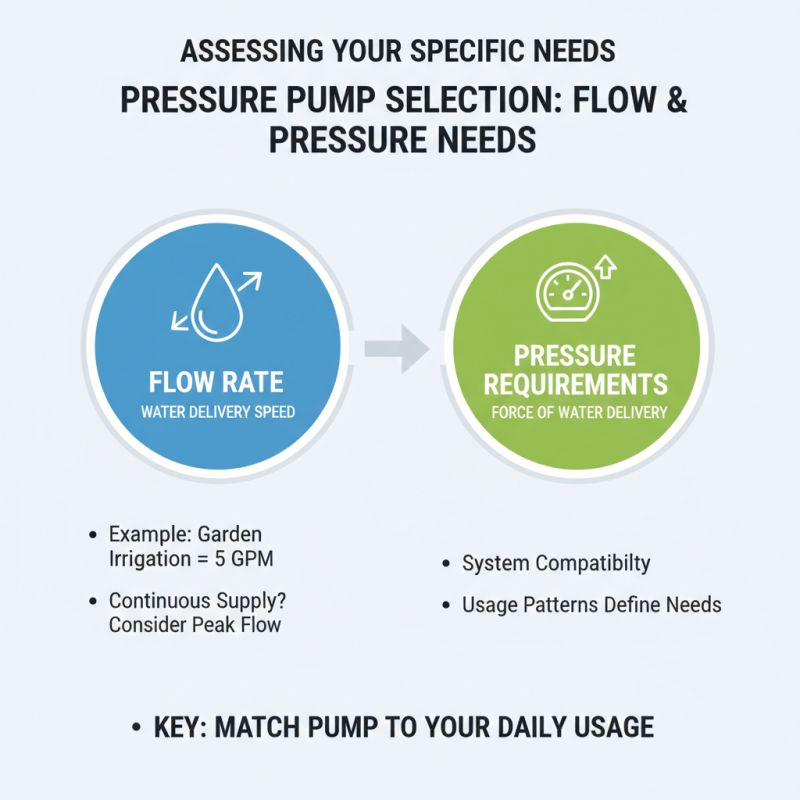
When selecting a pressure pump, it’s vital to assess your specific needs, particularly flow rate and pressure requirements. Flow rate indicates how quickly water can be delivered. For instance, a garden irrigation system may need a minimum of 5 gallons per minute. If you need continuous delivery, the system must accommodate peak flow rates efficiently. Understand your daily usage patterns. This will help define your flow requirements.
Pressure is equally critical. It is measured in pounds per square inch (PSI). If you need to operate sprinklers or high-pressure cleaning tools, a higher PSI is essential. Choose a pump that can provide sufficient pressure without straining. However, be cautious. A pump with excessive pressure can damage your plumbing or equipment. Striking the right balance is key.
It's easy to overlook these specifics in the excitement of purchasing a new pump. However, lack of attention to these details can lead to inefficiencies and increased costs. A pump that doesn’t meet your demands can escalate maintenance issues. Therefore, take time to analyze your requirements clearly before making a decision. This reflective approach will save you time and resources in the long run.
Key Features to Consider When Selecting a Pressure Pump
When selecting a pressure pump, the flow rate is crucial. This defines how much water the pump can deliver. A higher flow rate is essential for tasks like irrigation or filling a large tank. However, too much flow can lead to wasted energy. Assess your specific needs to avoid this common mistake.
Another vital feature is the pump's pressure rating, measured in PSI (pounds per square inch). Different applications require different pressure levels. For household tasks, a lower pressure might be sufficient. But industrial applications often need much higher ratings. It's worth checking your requirements carefully.
Durability is another key aspect. Look for pumps made with high-quality materials. Plastic pumps may be lighter and cheaper but can fail quickly under pressure. Metal or heavy-duty pumps are more reliable for long-term use. Keep in mind that the most expensive option isn't always the best fit. Evaluate your environment and usage frequency to ensure you make a wise investment.
Top Tips for Choosing the Right Pressure Pumps
This chart showcases key features to consider when selecting a pressure pump, with dimensions such as flow rate, maximum pressure, power consumption, noise level, and weight. Each feature is crucial for determining the best pump for specific needs.
Evaluating Quality and Reliability: Brands and Reviews
When selecting a pressure pump, evaluating quality and reliability is crucial. Start by researching reputable brands known for their durable products. Look for customer reviews that highlight performance over time. Positive feedback often speaks volumes about a product's longevity. Many users appreciate detailed reviews that discuss both advantages and disadvantages. A balanced view helps in making informed choices.
Consider the materials used in pump construction. High-quality materials often contribute to better performance. Stainless steel components, for instance, resist corrosion and extend the pump's lifespan. It is essential to examine warranty options provided by manufacturers. A solid warranty can be a good indicator of a brand's confidence in its products.
Lastly, check online forums for real-life experiences. Often, users share stories that highlight unexpected challenges. Pay attention to recurring issues mentioned across different forums. These insights can lead to crucial reflections on what might meet your specific needs. Gather as much information as possible before making a decision. The pressure pump you choose should truly fit your requirements, both in functionality and reliability.
Budget Considerations: Cost vs. Performance in Pressure Pumps
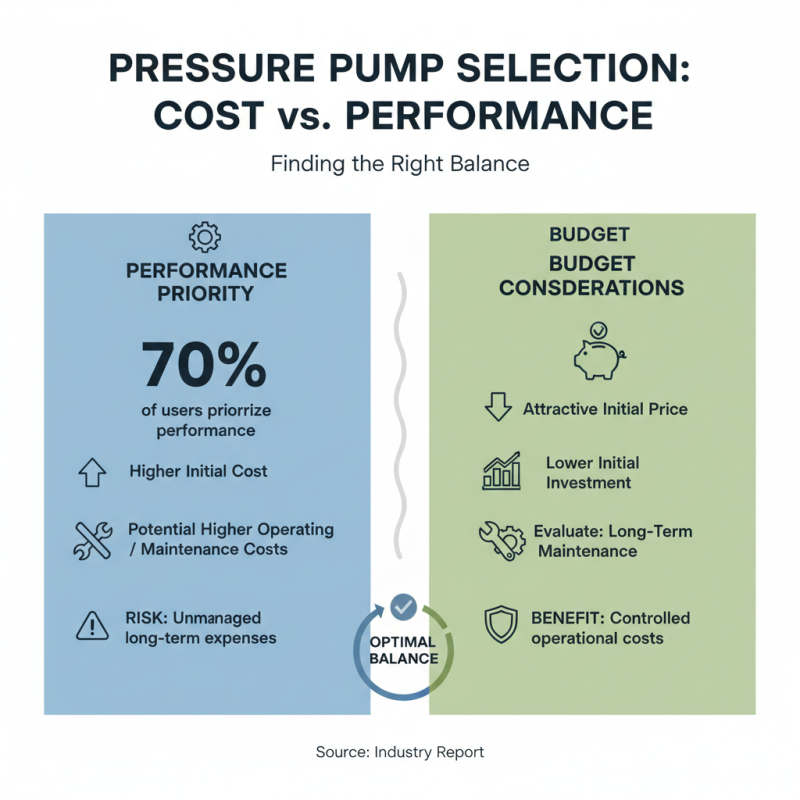
When selecting the right pressure pump, the balance between cost and performance is crucial. According to a recent industry report, approximately 70% of users prioritize performance over price, which can lead to higher operational costs if not managed carefully. Many pumps may have attractive initial prices but could incur higher maintenance expenditures over time.
Understanding your specific needs will also influence budget decisions. Some applications demand more robust pumps, which can be costlier yet save on repairs and downtime. Data shows that investing in a quality pump can reduce long-term costs by up to 30%. Evaluating energy efficiency is another important factor. Many high-efficiency pumps can lead to significant savings on electricity bills, further justifying their initial investment.
However, not every expensive pump guarantees optimal performance. Users often overlook the importance of installation techniques, which can affect a system's efficiency. A poorly installed pump can underperform regardless of its cost. Therefore, careful consideration and expert advice are necessary when making a decision. Balancing immediate costs with potential long-term savings can ensure you choose the right pump for your specific requirements.