2025 Top 10 Boiler Feed Tanks for Efficient Water Management
In the realm of industrial water management, the efficiency of boiler feed tanks plays a crucial role in ensuring optimal performance and sustainability. According to a recent report by the International Water Association, approximately 30% of water used in industrial processes is linked to steam generation, highlighting the significance of effective water management systems in mitigating water waste. The advancements in boiler feed tank technology have made it possible to enhance water quality while minimizing energy consumption, ultimately driving operational cost savings.
Industry expert Dr. Emily Chen, a leading consultant in water management systems, emphasizes the importance of innovation in this field:
"Incorporating advanced monitoring and control technologies in boiler feed tanks not only improves efficiency but also contributes significantly to reducing environmental impacts."
As we look towards
2025, understanding the top-performing boiler feed tanks will be essential for businesses aiming to optimize their water management strategies and meet regulatory demands.
This overview of the "2025 Top 10 Boiler Feed Tanks for Efficient Water Management" seeks to illuminate the latest innovations and best practices in boiler feed tank design. By exploring these leading solutions, organizations can pave the way to a more sustainable future while ensuring the reliability and efficiency of their steam generation processes.
The Importance of Selecting the Right Boiler Feed Tank for Optimal Water Management
Selecting the right boiler feed tank is crucial for optimal water management in industrial applications. A well-designed boiler feed tank can significantly enhance the efficiency of water usage and steam production. According to the 2023 Global Water Management Report, improper tank selection can lead to up to 25% energy loss, which directly impacts operational costs. Thus, choosing the right tank not only optimizes water usage but also contributes to overall energy efficiency.
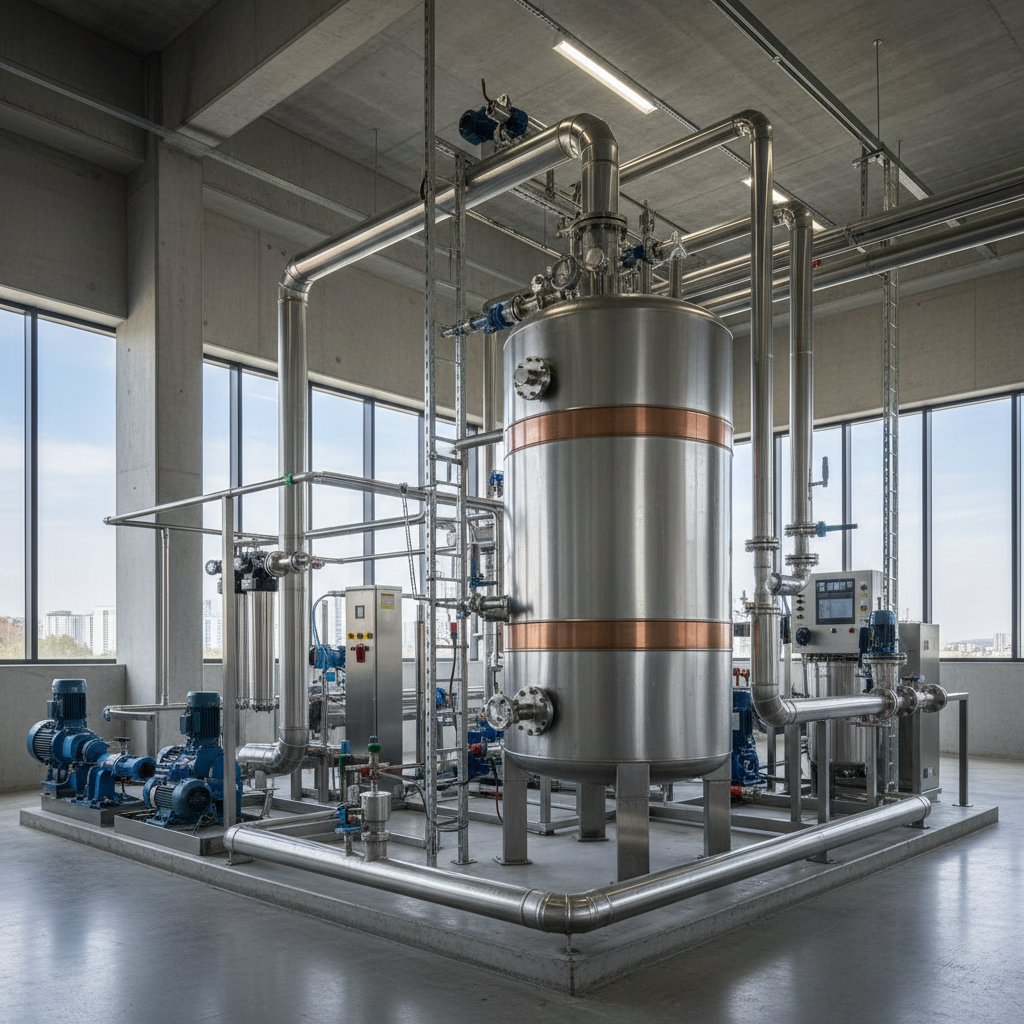
When evaluating boiler feed tanks, consider factors such as tank size, materials, and maintenance requirements. For instance, stainless steel tanks, while generally more expensive, offer superior corrosion resistance and longevity, significantly reducing long-term maintenance costs. Additionally, it's essential to select a tank that complements your boiler's capacity: a mismatch can lead to inadequate water supply or overspending on unnecessary capacity.
Tips for Selection:
1. Assess the dynamic water demand to determine the appropriate size for your tank.
2. Opt for reliable suppliers who provide detailed specifications and support for installation and maintenance.
3. Regularly evaluate the performance of your feed tank to ensure it meets evolving operational needs, thus safeguarding your investment.
Key Features to Consider When Choosing a Boiler Feed Tank for Efficiency
When selecting a boiler feed tank, several key features should be considered to ensure efficiency and longevity. First, assess the tank’s material. Stainless steel is often recommended due to its resistance to corrosion and ability to withstand high temperatures, contributing to lower maintenance costs over time. Next, examine the tank’s capacity; it should be large enough to accommodate peak demands but not excessively oversized, as this can lead to energy wastage.
Tip: Always select a tank equipped with proper insulation. Insulated tanks minimize heat loss, maintaining optimal water temperatures and reducing energy consumption.
Another essential feature to consider is the level control system. Automated systems provide accurate monitoring and help maintain consistent water levels, which is critical for boiler performance. Additionally, look for tanks with high-efficiency pumps that can respond quickly to load changes. This responsiveness not only supports operational efficiency but also prolongs the life of the boiler system.
Tip: Opt for tanks with maintenance-friendly designs. Easy access to components helps in timely inspections and repairs, ensuring your system remains efficient and reliable.
Industry Standards and Regulations Impacting Boiler Feed Tank Performance
In the realm of boiler feed tanks, industry standards and regulations play a crucial role in optimizing performance and ensuring safe operations. According to the American Society of Mechanical Engineers (ASME), adherence to their Boiler and Pressure Vessel Code is essential for maintaining equipment integrity. This code sets stringent guidelines for the design, fabrication, and inspection of tanks, which significantly impacts their efficiency and safety. For instance, ASME mandates that tanks must withstand specific pressure ratings, thereby enhancing their operational capability and reducing the risk of failure during high-demand cycles.
Furthermore, the Environmental Protection Agency (EPA) enforces regulations pertaining to water management that affect boiler feed tanks indirectly through water quality standards. Reports indicate that improper water treatment and management can lead to corrosion and scaling, ultimately decreasing the lifespan of boiler systems by up to 30%. By complying with these regulations, industries can ensure better water quality for boiler operations, substantially mitigating maintenance costs and enhancing overall system reliability. This synergy between regulatory compliance and effective water management is critical in optimizing the performance of boiler feed tanks in various industrial settings.
Comparative Analysis of Top 10 Boiler Feed Tanks Based on Efficiency Metrics
Boiler feed tanks play a critical role in the operational efficiency of boiler systems, particularly in power plants. In an era where the enhancement of operational efficiency is paramount to profitability, it is essential to conduct a comparative analysis of boiler feed tanks based on efficiency metrics. Recent studies indicate that optimizing feedwater management systems can lead to a significant reduction in operational costs, with efficiency improvements potentially reaching as high as 20%. Metrics such as the thermal efficiency of feedwater pre-heating and the minimization of dissolved oxygen presence—responsible for flow-accelerated corrosion—are crucial in evaluating these systems.
Moreover, modern designs of boiler feed tanks incorporate advanced technologies to enhance their performance capabilities. For instance, the integration of dynamic simulation techniques has been shown to improve the predictive accuracy of system behaviors under varying loads, demonstrating that well-designed feed tanks not only enhance power plant efficiency but also contribute to sustainability goals. Such developments are essential as the energy sector increasingly shifts toward greener solutions, with boiler feed tanks serving as a foundational element in achieving these objectives by optimizing water management practices and reducing environmental impacts significantly.
2025 Top 10 Boiler Feed Tanks for Efficient Water Management
| Rank |
Tank Capacity (Gallons) |
Material |
Efficiency Rating (%) |
Installation Cost ($) |
Maintenance Frequency (Months) |
| 1 |
500 |
Stainless Steel |
95 |
15,000 |
6 |
| 2 |
750 |
Carbon Steel |
92 |
12,000 |
8 |
| 3 |
1000 |
Fiberglass |
89 |
18,000 |
12 |
| 4 |
1200 |
Polyurethane |
90 |
20,000 |
10 |
| 5 |
1500 |
HDPE |
87 |
22,500 |
9 |
| 6 |
1800 |
Stainless Steel |
91 |
25,000 |
7 |
| 7 |
2000 |
Carbon Steel |
88 |
27,000 |
11 |
| 8 |
2200 |
Fiberglass |
86 |
30,000 |
10 |
| 9 |
2500 |
Polyurethane |
85 |
32,500 |
12 |
| 10 |
3000 |
HDPE |
84 |
35,000 |
14 |
Best Practices for Maintaining Boiler Feed Tanks to Enhance Water Utilization
Maintaining boiler feed tanks efficiently is crucial for enhancing water utilization in various industries. Best practices emphasize regular monitoring and upkeep to avoid water wastage. According to a recent report by the Water Research Foundation, efficient boiler feed operations can reduce water usage by up to 50% when proper maintenance protocols are followed. This involves routine inspections of tanks, ensuring proper drainage, and timely removal of any sediment that could compromise water quality and efficiency.
In addition to routine maintenance, the adoption of advanced technologies can greatly enhance the performance and longevity of boiler feed tanks. Utilizing water reclamation methods, such as recycling HVAC condensate, can significantly minimize freshwater dependency. Data from the Environmental Protection Agency indicate that facilities using such strategies can achieve up to 30% in operational water savings. Furthermore, ensuring proper insulation and temperature management during cold weather is essential, as it prevents freezing and potential damage to the system, underscoring the importance of proactive measures in water management processes.