Top Solar Applications that Drive Global Demand?
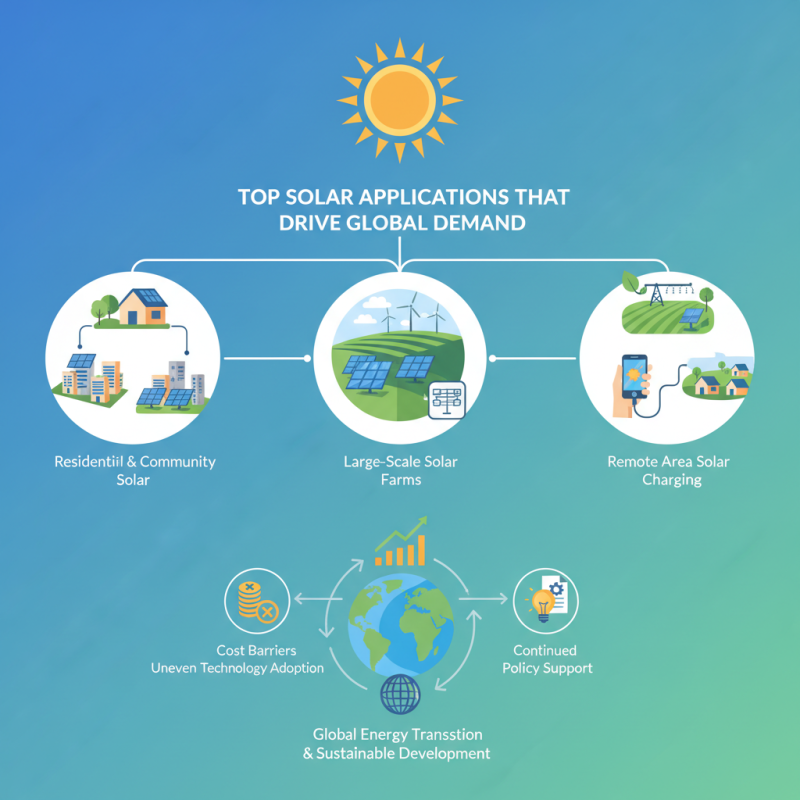
The surge in global demand for Solar Applications is reshaping energy landscapes. According to the International Renewable Energy Agency (IRENA), solar power now accounts for nearly 10% of total electricity generation worldwide. This growth is driven by various applications, from residential solar panels to large-scale solar farms that provide energy for entire communities.
Renowned solar expert Dr. Emily Richards emphasizes, "The versatility of solar applications is key to accelerating the energy transition." Her insights highlight the importance of tailored solutions that meet diverse needs. In industries such as agriculture, solar irrigation systems enhance efficiency, while solar-powered chargers facilitate access to electricity in remote areas. These applications not only reduce reliance on fossil fuels but also foster sustainable development.
Despite these advancements, challenges remain. Cost barriers can hinder widespread adoption in certain regions. Also, technology adoption is uneven, leading to a gap in access. Continued innovation and policy support are essential to maximize the potential of solar applications and ensure equitable energy distribution globally.
Key Contributions of Solar Energy to Global Power Generation
Solar energy has become a vital contributor to global power generation. In 2022, solar power accounted for approximately 10% of the world's total electricity output. This figure is expected to grow, driven by advancements in technology and increased investment. The International Energy Agency (IEA) predicts that solar could reach 30% of global electricity supply by 2030. This growth highlights the significance of solar applications in the energy sector.
Solar energy contributes significantly through various applications. Utility-scale solar farms generate large amounts of electricity, while residential solar installations allow homeowners to harness clean energy. Innovative rooftop systems and solar panels make it feasible for urban areas to utilize solar energy efficiently. Additionally, advancements in solar battery storage technology enable excess power to be stored for later use, addressing the intermittency issues of solar energy.
Yet, challenges remain. The need for effective recycling systems for solar panels is pressing. Current solutions are not yet widespread. Moreover, the integration of solar power into existing grids can create complications. Grid stability must be maintained, requiring robust infrastructure and investment. As demand for solar energy grows, addressing these challenges will be essential for achieving a sustainable energy future.
Top Solar Applications Driving Global Demand
This chart illustrates the key solar applications contributing to global power generation. The data reflects the percentage share of each application in the overall solar energy market as of 2023.
Solar Heating and Cooling Systems: Applications and Benefits
Solar heating and cooling systems have emerged as a vital part of the renewable energy landscape. These systems harness solar energy to provide efficient heating and cooling for residential and commercial buildings. They reduce reliance on fossil fuels and lower greenhouse gas emissions. By utilizing sunlight, these systems offer sustainable solutions for various climates and applications.
The benefits are significant. For instance, solar water heating can provide hot water for homes, while cooling systems can regulate indoor temperatures effectively. The efficiency of these systems can greatly decrease energy costs. However, initial installation requires a substantial investment. Some users may struggle with the technical aspects of system maintenance. This warrants a need for technical training and support.
Adopting solar heating and cooling requires careful consideration. While the environmental benefits are clear, potential buyers should weigh upfront costs against long-term savings. Each system varies in efficiency depending on geographic location and weather conditions. Furthermore, not all properties can accommodate solar systems effectively, creating limitations that demand critical evaluation. Engaging with knowledgeable professionals can help navigate these challenges.
Solar-Powered Transportation: Innovations Driving Demand
The transportation sector is undergoing a significant transformation due to solar power innovations. Many new projects focus on solar vehicles. These vehicles utilize photovoltaic cells to convert sunlight directly into electricity. This technology not only reduces reliance on fossil fuels but also lowers operational costs.
Solar-powered buses and cars are becoming more common in urban areas. They provide feasible alternatives to traditional fuel-powered options. However, challenges remain. Not all cities have the necessary infrastructure to support this shift. Charging stations for solar vehicles are still limited, causing concerns for potential users.
Innovative solutions are being developed, but progress is slow. Mobility as a service is emerging with solar integrations. This approach blends public and private transport. Yet, public acceptance varies. Some people are skeptical about the efficiency of solar power in transportation. More awareness and education are needed to build trust. Overall, the landscape is changing, but hurdles remain in adopting solar power for transportation fully.
Emerging Trends in Solar Energy Storage Solutions
The solar energy market is rapidly evolving, and storage solutions are taking center stage. As the world shifts towards renewable energy, efficient storage becomes crucial. According to the International Energy Agency (IEA), global energy storage capacity could increase by over 300 GWh by 2030. This growth is a response to the pressing need for grid stability and energy independence.
Emerging trends indicate that lithium-ion batteries dominate the market. However, alternatives like flow batteries are gaining traction. They promise longer lifecycle and better scalability. Reports show that while lithium-ion technology accounts for around 80% of the market, flow batteries could provide solutions for larger installations. This shift may help address the intermittency issues associated with solar energy.
Despite progress, challenges remain. Storage technologies must improve efficiency and reduce costs further. Current projections suggest that achieving widespread adoption will require significant investment and innovation. Policymakers and manufacturers must collaborate to navigate these hurdles. The potential of solar energy storage is enormous, but realizing it will take concerted effort and time.
Top Solar Applications that Drive Global Demand - Emerging Trends in Solar Energy Storage Solutions
| Application | Global Demand (GW) | Storage Technology | Growth Rate (%) |
| Residential Solar | 150 | Lithium-ion | 15 |
| Commercial Solar | 120 | Flow Batteries | 20 |
| Utility-Scale Solar | 300 | Lithium-ion | 25 |
| Off-grid Solar | 80 | Lead-acid | 10 |
Residential and Commercial Solar Installations: Market Impact
The residential and commercial solar installation market has gained significant momentum. More homeowners and businesses are opting for solar energy. This shift is fueled by rising energy costs and an increased focus on sustainability.
Investing in solar panels can result in substantial savings. Residential installations can reduce electricity bills by 50% or more. Meanwhile, commercial systems often see a return on investment within just a few years. Evaluating specific energy needs can guide installation choices. Working with local experts can also enhance the efficiency of solar systems.
However, not all solar installations are perfect. Some systems underperform due to improper installation or location. Regular maintenance is vital for maximizing energy output. Additionally, understanding local incentives and regulations can help avoid potential pitfalls. Making informed decisions can lead to sustainable energy practices.