Choosing the right centrifugal pump parts is rarely a simple replacement task. A worn impeller may look like the main problem, yet damaged wear rings or poor shaft alignment can cause repeated failures. Field experience shows that small mismatches often create expensive vibration, leakage, and energy losses.
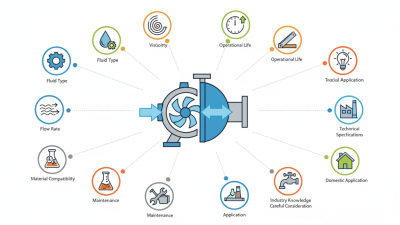
A reliable selection process begins with the pump model, duty conditions, and service fluid. Check flow rate, head, speed, temperature, pressure, and material compatibility. Then compare dimensions against the manufacturer’s drawings or certified specifications. Impellers, casings, shafts, seals, bearings, and couplings must work as one system. Stainless steel may suit corrosive water, while hardened alloys can perform better with abrasive fluids. The correct choice depends on evidence, not appearance.
Details matter.
Review maintenance records before ordering replacements. Look for recurring seal failures, unusual bearing heat, or scoring inside the casing. These clues may reveal an underlying operating issue rather than a defective part. Original equipment manufacturer data can improve reliability, but reputable independent suppliers may also provide suitable alternatives. Their material certificates, inspection reports, and dimensional tolerances deserve careful review.
This guide explains how to evaluate centrifugal pump parts with practical, engineering-based judgment. It covers material selection, compatibility, fit, performance, and supplier credibility. Some decisions remain uncertain without testing. That is worth admitting. A part that fits perfectly may still fail under the wrong temperature or pressure. Careful verification, documented measurements, and consultation with qualified pump technicians can reduce that risk and support safer, more dependable operation.
Choosing centrifugal pump parts starts with defining the pump’s job. Is it moving clean water, abrasive slurry, or a chemical solution? Fluid temperature, viscosity, solids, and corrosion potential guide material selection. Record the required flow rate and total head at the duty point. Check suction conditions carefully, because insufficient NPSH can cause cavitation. It sounds basic. Rushed measurements often create expensive rework.
The impeller transfers energy to the fluid. The casing guides flow and controls pressure. The shaft carries torque from the driver. Bearings support rotation under load. A mechanical seal limits leakage around the shaft. Wear rings maintain internal clearances, but they can suffer quickly in dirty service. Operating requirements matter too. Note the running hours, start frequency, speed, ambient temperature, and installation position. A pump with frequent starts may need stronger bearings and a seal designed for thermal cycling.
In field inspections, I have seen parts selected only by dimensions. That approach can work briefly, then fail under real conditions. I once underestimated suspended solids during an equipment review. The replacement impeller matched the drawing, but its material wore too quickly. The better process is to compare duty data with actual operating records. Listen for vibration, inspect seal leakage, and review maintenance intervals. A small mismatch in flow or head can change the entire parts decision. Performance data is useful, but honest site observations are essential.
Define the pump's role and operating requirements before selecting parts. Flow rate and total head determine the hydraulic design, while temperature and fluid condition influence the casing, impeller, shaft seal, bearings, and material selection.
Choosing centrifugal pump parts starts with the pump’s actual design, not a general parts list. Check whether it uses an open, semi-open, or closed impeller. A multistage pump also requires parts that match its stage arrangement, pressure, and shaft geometry. Impeller diameter, wear ring clearance, and seal dimensions must follow the equipment drawing. Small dimensional errors can create vibration, leakage, or reduced flow.
Check the fluid carefully. Clean water may suit stainless steel or coated carbon steel components. Abrasive slurry needs stronger wear resistance and greater clearance control. Corrosive chemicals may require carefully selected alloys, ceramic faces, or compatible elastomers. Temperature changes can harden seals or reduce gasket flexibility. Viscous fluids may also demand a different impeller design and motor calculation. Do not judge compatibility by appearance.
Operating conditions matter as much as material selection. Record flow rate, discharge pressure, temperature, solids concentration, and suction conditions before ordering parts. Compare these values with the pump’s rated range and maintenance history. A seal that works well at moderate temperature may fail during frequent hot starts. Paper is not enough. Field evidence matters.
A reliable selection process includes shaft runout checks, bearing inspection, and clearance measurements. Confirm tolerances with approved technical drawings and qualified suppliers. Some decisions remain uncertain when fluid chemistry changes seasonally. That uncertainty should be documented, not hidden. A cheaper part can become expensive after one premature shutdown.
How to Choose the Right Centrifugal Pump Parts?
Evaluate Impellers, Casings, Seals, Bearings, and Shafts
Choosing centrifugal pump parts starts with the pumped liquid, not the catalog picture. Check its temperature, viscosity, solids content, and chemical activity. An impeller must deliver the required flow and head without excessive vibration. Closed impellers suit cleaner liquids, while open or semi-open designs tolerate some suspended solids. However, they may lose efficiency faster. Measure the casing passage carefully. A narrow passage can clog, while an oversized casing may reduce operating efficiency.
Mechanical seals protect against leakage around the rotating shaft. Select faces and elastomers that match the liquid and temperature. Small compatibility errors can cause swelling, cracking, or early leakage. Bearings must carry radial and axial loads under the actual operating speed. Listen for roughness and check lubrication conditions during maintenance. The shaft should resist bending and corrosion. Even a strong shaft can fail when alignment is poor or the pump runs far from its best efficiency point.
Tips: Compare operating data with the original equipment drawing and maintenance records. Inspect wear rings, shaft sleeves, and bearing fits instead of replacing only the visible failure. Keep a sample of the pumped liquid for material review when conditions are uncertain. Do not trust appearance alone. I have seen clean-looking parts hide deep erosion near the impeller eye. Recheck measurements twice, because a small clearance error can become a costly vibration problem.
A practical comparison of key selection criteria, materials, operating limits, and inspection points for centrifugal pump components.
| Pump Part | Primary Function | Key Selection Data | Common Material Options | Typical Operating Considerations | Inspection or Failure Indicators | Recommended Evaluation Questions |
|---|---|---|---|---|---|---|
| Impeller | Transfers mechanical energy to the liquid and develops flow and pressure. | Flow rate, total head, speed, impeller diameter, vane geometry, solids content, and required efficiency. | Cast iron, stainless steel, duplex stainless steel, bronze, engineered plastics, or high-chrome alloys. | Closed impellers generally provide higher efficiency for clean liquids. Open or semi-open designs are more tolerant of suspended solids but may have lower efficiency. | Erosion, corrosion, blocked passages, imbalance, cracked vanes, reduced capacity, vibration, or abnormal power consumption. | Does the impeller diameter match the required head? Is the passage size suitable for solids? Is the material compatible with the liquid chemistry? |
| Casing | Contains the liquid and converts part of the impeller’s velocity into pressure. | Design pressure, operating temperature, nozzle arrangement, casing type, hydraulic passage, corrosion allowance, and pressure-test requirements. | Cast iron, ductile iron, carbon steel, stainless steel, duplex stainless steel, nickel alloys, or lined construction. | Volute casings are common for single-flow pumps; diffuser casings can improve hydraulic recovery in selected high-head designs. The pressure rating must exceed the maximum allowable operating pressure. | Leakage, wall thinning, pitting, distortion, gasket damage, excessive hydraulic noise, or cracks near flanges and mounting points. | What are the maximum suction and discharge pressures? Is the casing rated for the fluid temperature and corrosion environment? |
| Mechanical Seal | Limits leakage along the rotating shaft where it exits the pump casing. | Fluid chemistry, temperature, pressure, shaft speed, solids concentration, seal arrangement, face combination, and flush or cooling requirements. | Carbon, silicon carbide, tungsten carbide, ceramic, stainless steel, elastomers, and corrosion-resistant metal components. | Seal faces require adequate lubrication and cooling. Dry running, flashing, abrasive particles, excessive shaft movement, and misalignment can shorten seal life. | Visible leakage, heat discoloration, face wear, cracked seal rings, elastomer swelling, frequent flush blockage, or sudden loss of containment. | Is the seal compatible with the liquid? Will the process require a single, double, cartridge, or externally flushed arrangement? |
| Bearings | Support the shaft and control radial and axial movement during rotation. | Radial load, axial thrust, operating speed, bearing life, lubrication method, ambient temperature, contamination risk, and alignment. | Through-hardened bearing steel, stainless bearing steel, ceramic hybrid materials, bronze, or specialized polymer cages. | Bearing selection should account for both radial loads from hydraulic forces and axial loads from impeller thrust. Lubricant viscosity and quantity strongly affect temperature and service life. | Rising temperature, rumbling or grinding noise, vibration at bearing frequencies, lubricant contamination, pitting, flaking, or excessive shaft movement. | What are the calculated radial and axial loads? Is the bearing arrangement suitable for the speed, lubrication, and expected service life? |
| Shaft | Transmits torque from the driver to the impeller and maintains component alignment. | Torque, bending load, critical speed, shaft diameter, deflection, corrosion exposure, keyway design, fit tolerances, and seal-sleeve requirements. | Carbon steel, stainless steel, precipitation-hardening stainless steel, duplex stainless steel, or alloy steel. | The shaft must resist torsion and bending while keeping deflection within the seal and bearing limits. Operating speed should remain safely separated from critical speed. | Runout, fretting, corrosion under sleeves, damaged keyways, fatigue cracks, worn fits, coupling misalignment, or repeated seal failure. | Is the shaft adequately sized for torque and bending? Are runout, fit tolerances, surface finish, and corrosion resistance documented? |
| Wear Rings | Control internal recirculation between high- and low-pressure areas and protect major components. | Diametral clearance, wear rate, fluid abrasiveness, temperature, pressure differential, and replaceability. | Stainless steel, bronze, hardened steel, nickel alloys, or non-metallic wear-resistant materials. | Excessive clearance increases internal leakage and reduces pump efficiency. Clearance must account for thermal expansion and material pairing. | Reduced head, lower efficiency, increased recirculation noise, scoring, grooving, or metal-to-metal contact. | Can the wear ring be replaced independently? Are the specified clearances appropriate for temperature and liquid properties? |
| Gaskets and O-Rings | Provide static sealing between casing joints, covers, flanges, and stationary components. | Fluid compatibility, temperature range, pressure, flange configuration, compression, groove dimensions, and service frequency. | Elastomers, graphite, expanded PTFE, aramid fiber composites, spiral-wound construction, or metallic seals. | Material selection must consider chemical attack, swelling, compression set, thermal cycling, and installation torque. | External leakage, flattening, hardening, swelling, extrusion, cuts, compression-set marks, or repeated joint failure. | Is the sealing material approved for the liquid, temperature, and pressure? Are flange faces and grooves within tolerance? |
| Evaluation Area | Minimum Information to Confirm | Why It Matters |
|---|---|---|
| Hydraulic duty | Required flow, total head, suction conditions, liquid density, viscosity, and solids content. | Determines impeller geometry, casing passage, power demand, and expected efficiency. |
| Materials compatibility | pH, chlorides, temperature, abrasive particles, chemical concentration, and contamination limits. | Reduces corrosion, erosion, swelling, premature wear, and loss of containment. |
| Mechanical integrity | Shaft deflection, bearing loads, critical speed, coupling alignment, clearances, and runout. | Prevents vibration, seal damage, fatigue, bearing failure, and rotor-to-stator contact. |
| Maintenance strategy | Availability of replacement parts, inspection intervals, repairability, and installation requirements. | Supports predictable downtime, lower lifecycle cost, and consistent pump performance. |
| Operating safety | Maximum pressure, temperature, leakage limits, hazardous-fluid requirements, and applicable standards. | Ensures the selected parts are suitable for the full operating envelope, not only normal conditions. |
Choosing centrifugal pump parts starts with measurement, not appearance. Record shaft diameter, keyway size, impeller eye, casing bore, bolt pattern, and seal dimensions. Use calibrated tools, then measure the removed part after cleaning it. Scale can distort a reading. ISO 2858 provides dimensional references for many end-suction centrifugal pumps. However, it does not make every replacement interchangeable.
Compatibility requires more than matching a part number. Check wetted materials against fluid chemistry, temperature, solids, pressure, and rotational speed. Hydraulic Institute standards emphasize evaluating operating conditions, clearances, and performance together. A stainless impeller may resist corrosion, yet abrasive particles can accelerate wear.
The U.S. Department of Energy’s Improving Pumping System Performance sourcebook notes that pumping systems may represent 25% or more of industrial electricity use. An incorrect impeller diameter can push operation away from the best efficiency point.
Manufacturer specifications should confirm tolerances, metallurgy, balancing grade, seal limits, and installation orientation. Request a certified drawing and material certificate, not only a photograph. Compare the replacement head-flow curve with the original duty point.
A drawing can look correct, while the part still binds after thermal expansion. This is easy to miss. Recheck coupling fit, gasket compression, shaft runout, and rotation direction before startup. Leave room for doubt.
Choosing centrifugal pump parts requires more than comparing purchase prices. Quality affects leakage, vibration, energy use, and service life. The U.S. Department of Energy reports that pumping systems may consume 25–50% of industrial facility electricity. A poorly fitted impeller or worn wear ring can quietly increase this burden. Check metallurgy, dimensional accuracy, shaft alignment, seal compatibility, and operating temperature before approving a part. Small differences matter.
Maintenance needs should guide the decision. The DOE Operations & Maintenance Best Practices guide links preventive maintenance with 12–18% savings over reactive maintenance. Choose parts with accessible inspection points and commonly available seals, bearings, and gaskets. Keep critical spares on site. It prevents long shutdowns. However, a larger spare inventory also ties up cash. That trade-off deserves review.
A cheaper seal may appear sensible, but early leakage can erase the saving within weeks. Compare the total cost of ownership, not only the invoice. For replacement options, verify interchangeability through drawings, material certificates, tolerances, and performance curves. Equivalent parts can work well when specifications truly match. They can also disappoint when catalog data is incomplete. I have seen purchasing teams trust dimensions alone; that shortcut is risky. Record operating history, failure causes, and inspection findings before selecting the next part.