Chemical processing rarely forgives a poor pump match. A leaking seal, pitted impeller, or unstable flow can interrupt an entire production line. For buyers comparing China’s manufacturers, the chemical centrifugal pump is therefore more than a catalog item. Material compatibility, operating range, and service support matter.
Grand View Research valued the global industrial pumps market at approximately US$68 billion in 2023. Its market coverage is broader than chemical centrifugal pumps, so that figure should not be mistaken for this segment’s size. It does, however, show the scale of the wider equipment market. Rotating-equipment authority Heinz P. Bloch’s reliability work supports a practical selection principle. A fair paraphrase—not a verbatim quotation—is: “Match the pump to its actual duty, then verify performance in service.” That distinction matters.
This guide compares manufacturers through engineering evidence, not polished brochures alone. Look for documented hydraulic curves, suitable wetted materials, seal options, testing records, and clear warranty terms. Ask how the supplier handles corrosive fluids, solids, temperature changes, and operation away from the best-efficiency point. Small details count. A stated alloy grade, for example, should match the fluid and concentration in your process. No shortlist replaces a technical review; even strong factory claims need checking against the application. The following overview helps buyers assess Chinese manufacturers with sharper questions and more realistic expectations.
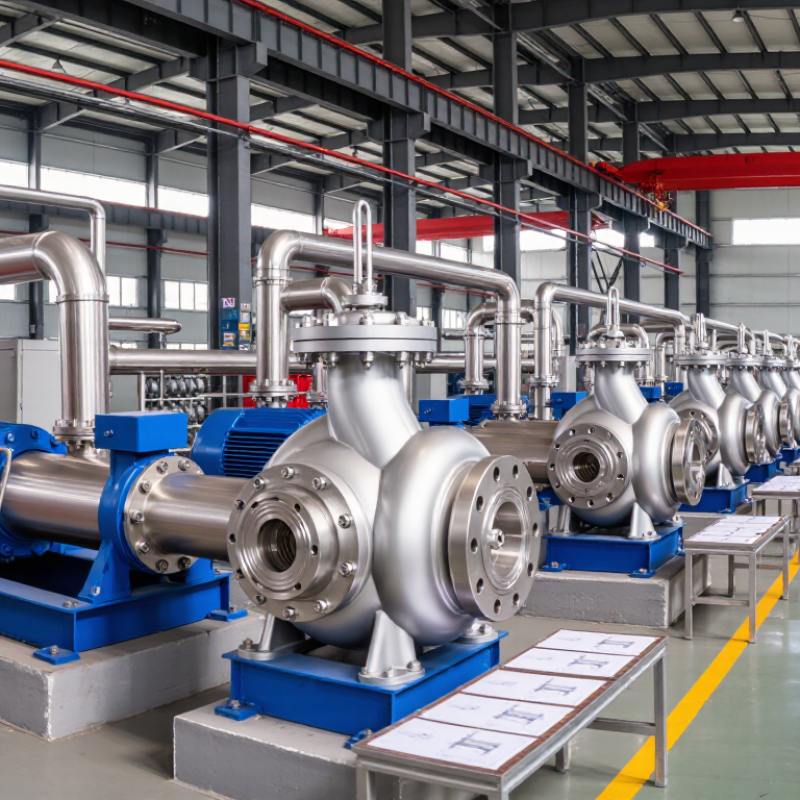
Chemical centrifugal pumps move liquids by turning motor rotation into flow and pressure. In process plants, they transfer acids, solvents, brines, and wash fluids between tanks, reactors, heat exchangers, and treatment lines. An impeller spins inside a casing, which directs liquid toward the discharge. Steady flow matters. It supports dosing, cooling, circulation, and equipment operation. Chemical service adds constraints: corrosion, heat, suspended solids, and vapor can all affect performance.
The U.S. Department of Energy’s Improving Pumping System Performance: A Sourcebook for Industry reports that pumping systems use nearly 20% of global electricity demand. In some industrial operations, they account for 25–50% of energy use. Correct sizing therefore matters. An oversized pump may waste energy through throttling; an undersized one may miss required flow or pressure. Real operating conditions can be messier than sizing charts suggest.
Selection begins with fluid data, not just pipe diameter. Engineers assess viscosity, density, vapor pressure, temperature, concentration, and solids. Wetted materials and seals must suit the fluid, while suction conditions affect cavitation risk. Filters foul. Valves move. These changes can shift a pump away from its intended operating point. Routine checks of vibration, leakage, and flow help identify problems before they disrupt production.
Evaluating Chinese chemical pump manufacturers starts with the process, not the catalogue. Share the fluid’s concentration, temperature, viscosity, and any suspended solids. Ask the manufacturer to confirm wetted materials against those exact conditions. Generic corrosion charts are useful, but they cannot replace application-specific engineering. Details matter. Request written limits for pressure, temperature, and operating range.
Review the technical evidence. Compare the pump curve with your required flow and head, and check net positive suction head requirements. Ask for documented factory tests covering flow, pressure, and vibration. Short answer? A brochure is not a test report. Confirm how the manufacturer checks casing pressure, shaft alignment, and mechanical seals. If a curve or test record is unclear, ask for the measurement conditions; small omissions can change how you interpret the data.
Production control and service deserve equal attention. Check whether material certificates, inspection records, and spare-part lists can be tied to the supplied unit. Ask who handles commissioning questions and how quickly common parts can be shipped. References should involve similar fluids and operating conditions, not merely a similar industry. Compare lifecycle costs, including energy use, seal replacement, and maintenance access. Some documents may use unfamiliar terms or inconsistent units. That is not automatically a warning sign, but it needs clarification before purchase.
Leading chemical centrifugal pump manufacturers in China are best judged by engineering evidence, not catalogue size. Chemical-duty service can expose weak points quickly: corrosive liquid, abrasive particles, heat, and frequent starts all challenge wetted parts and seals. The U.S. Department of Energy’s Improving Pumping System Performance sourcebook reports that pumping systems use nearly 20% of global electricity demand, with some industrial facilities devoting 25–50% of their energy use to pumping. The report is not China-specific, but it shows why hydraulic efficiency and correct sizing deserve close attention. Small details matter.
A capable manufacturer should provide material compatibility guidance, performance curves, and test records tied to the proposed operating point. Ask how the pump performs near the required flow and head, not only at its best-efficiency point. Check casing and impeller materials against the actual fluid, temperature, and solids content. Request details on seal arrangements, vibration checks, and spare-part availability. Factory audits and witnessed tests can add useful evidence, though they do not guarantee long service life. A polished test sheet is not the whole story. Compare it with operating conditions and maintenance access at the installation site. Some selection decisions remain uncertain; fluid composition can vary, and published curves may not capture every real-world change. A careful buyer should document those assumptions before choosing a supplier.
| Evaluation Dimension | Relevant Standard or Common Practice | What Buyers Should Verify |
|---|---|---|
| Pump design and dimensions | ISO 2858 specifies designation, nominal duty points, and principal dimensions for certain end-suction centrifugal pumps. | Confirm the pump type, nozzle arrangement, installation dimensions, and whether the offered model falls within the standard’s scope. |
| Technical design requirements | ISO 5199 gives technical requirements for Class II centrifugal pumps used in process applications. | Ask which standard and design class apply, and request the relevant technical documentation for the quoted model. |
| Performance and acceptance testing | ISO 9906 specifies acceptance tests for rotodynamic pumps, including performance testing and acceptance grades. | Compare the tested flow, head, power, and efficiency with the agreed duty point; specify the required acceptance grade in the order. |
| Wetted materials | Common options include stainless steels, duplex stainless steels, nickel alloys, and lined constructions; suitability depends on the process fluid and conditions. | Check chemical compatibility against fluid composition, concentration, temperature, pressure, and any solids; do not select materials by alloy name alone. |
| Shaft sealing | Mechanical seals are commonly used in chemical service. API 682 covers shaft sealing systems for centrifugal and rotary pumps in petroleum, natural gas, and chemical industries. | Confirm seal arrangement, seal-face and elastomer materials, flush or barrier-fluid requirements, and compatibility with the process and site rules. |
| Industry-specific requirements | API 610 sets requirements for centrifugal pumps used in petroleum, petrochemical, and natural gas industries; it is not automatically required for every chemical process application. | Establish whether the project specification calls for API 610 or another design basis, and verify the supplier’s compliance against that specification. |
| Documentation and traceability | Documentation is normally defined by the purchase specification and may include datasheets, drawings, material records, inspection records, and test reports. | Agree on document scope, material identification, inspection and test requirements, and final records before placing the order. |
Note: Applicable standards, materials, and pump configurations depend on the project specification and operating conditions.
Chinese chemical centrifugal pump manufacturers differ most in wetted materials, hydraulic design, and quality control. Common options include stainless steel, duplex alloys, and fluoropolymer-lined casings. Each suits different fluids, but no material is universally safe. Concentration, temperature, and impurities can change compatibility.
Design choices shape maintenance and performance. Back-pull-out pumps allow servicing without moving connected pipework; magnetic-drive designs reduce leakage paths. Vertical pumps can fit narrow sumps, while conventional horizontal units suit accessible process lines. The U.S. Department of Energy’s guide, Improving Pumping System Performance, reports that pumping systems use nearly 20% of global electricity demand. Efficiency matters. Yet a high-efficiency rating alone says little about corrosion resistance or seal life.
For buyers, compare material certificates, hydraulic test records, and documented operating limits—not just catalog flow and head. Ask how the supplier verifies impeller balance and casing pressure, and whether parts are interchangeable across the stated range. Small details matter. A pump tested with clean water may behave differently with hot, viscous process liquid. That gap is easy to overlook, even by experienced teams.
When comparing chemical centrifugal pump manufacturers in China, look beyond catalog capacity and price. Numbers can mislead. Confirm that the proposed flow rate and head match your actual operating conditions, including fluid temperature and expected changes in demand. Ask for the pump performance curve and check where your duty point falls. A point near the edge of the curve may leave little room for adjustment.
Verify that wetted parts, seals, and gaskets suit the specific chemical and its concentration; a material described as corrosion-resistant is not automatically suitable for every service. Ask for evidence, not only assurances.
Review inspection records, material certificates, and the scope of factory testing. Clarify whether tests cover the assembled pump and what results will be shared before shipment. Check spare-part availability, warranty terms, and response times for technical questions.
If the supplier proposes a custom configuration, request a drawing that identifies connections, dimensions, and seal arrangement. A polished brochure is not a test report, and even a complete document set can leave gaps. Notice how clearly the supplier explains those gaps. It is worth asking one more question when an answer sounds too simple.