Top 10 Chemical Pump Types for Global Buyers Need?
The global market for chemical pumps is rapidly evolving. According to a report by MarketWatch, the chemical pump market is projected to reach USD 9.3 billion by 2027, growing at a compound annual growth rate (CAGR) of 3.8%. This signifies a rising demand from various sectors, including chemical processing, oil and gas, and water treatment.
Chemical pumps are crucial for efficient fluid movement in these industries. They handle aggressive chemicals, ensuring safety and reliability. Yet, despite advancements, many companies still struggle to choose the right pump type for their specific needs. Miscalculating the requirements can lead to system failures and costly downtime.
Understanding the top chemical pump types available can help businesses make informed decisions. It's essential to consider factors like fluid characteristics, operational conditions, and compatibility. This knowledge not only enhances operational efficiency but also minimizes risks associated with pump malfunction.

Top 10 Chemical Pump Types: An Overview of Essential Features
Chemical pumps play a crucial role in various industries. Understanding their features is vital for making informed choices. Different types of chemical pumps serve unique functions, and knowing these can help you match a pump's capabilities to your specific needs.
Diaphragm pumps, for example, are perfect for handling corrosive fluids. They offer excellent leak prevention and work well with viscous materials. On the other hand, gear pumps are ideal for high-pressure applications. They deliver a constant flow rate and are highly efficient. Each type brings its strengths and weaknesses to the table, raising important considerations for buyers.
Safety features are another essential aspect to consider. Many pumps incorporate double-seal designs to minimize leaks. Monitoring systems can also alert operators to potential issues. Each of these elements enhances reliability, but they may increase initial costs. Ultimately, buyers must weigh price against performance to find the best fit.
Top 10 Chemical Pump Types for Global Buyers
| Pump Type |
Applications |
Flow Rate (L/min) |
Pressure (bar) |
Material Compatibility |
| Centrifugal Pump |
Water, chemicals |
100 - 1500 |
1 - 10 |
Metals, plastics |
| Diaphragm Pump |
Corrosive liquids |
10 - 60 |
2 - 5 |
Rubber, PTFE |
| Peristaltic Pump |
Food, pharmaceuticals |
1 - 100 |
0.5 - 5 |
Silicone, rubber |
| Gear Pump |
Viscous liquids |
0.5 - 200 |
5 - 20 |
Metals, plastics |
| Progressive Cavity Pump |
Slurries, viscous liquids |
10 - 400 |
1 - 25 |
Metals, elastomers |
| Vacuum Pump |
Gases, vapors |
5 - 50 |
0.5 - 5 |
Various |
| Magnetic Drive Pump |
Chemicals, acids |
30 - 150 |
2 - 10 |
Metals, composites |
| Lobe Pump |
Food, pharmaceuticals |
5 - 200 |
0.5 - 7 |
Various |
| Reciprocal Pump |
High-pressure applications |
10 - 250 |
5 - 30 |
Metals, rubber |
Key Specifications and Performance Metrics in Chemical Pump Selection
When selecting a chemical pump, key specifications are critical. The materials of construction must match the fluid characteristics. For corrosive liquids, materials such as stainless steel or plastic should be considered. The pump's flow rate is another vital metric. It must meet the requirements of your system.
Performance metrics include the efficiency and head pressure of the pump. A high-efficiency design often leads to lower operational costs. Head pressure impacts the ability of the pump to move fluids against gravity. Cavitation is a concern; it can cause significant damage. Ensure that the specified NPSH (Net Positive Suction Head) margin is adequate.
Understanding these parameters requires expertise. Many buyers overlook the importance of pump sizing and capacity. It may lead to inefficient operation or even pump failure. Analyzing the system's total dynamic head (TDH) is essential. This calculation gives insight into the energy required for optimal performance. Engaging with specialists in pump technology can provide valuable insights for effective selection.
Market Demand and Growth Trends for Chemical Pumps in 2023
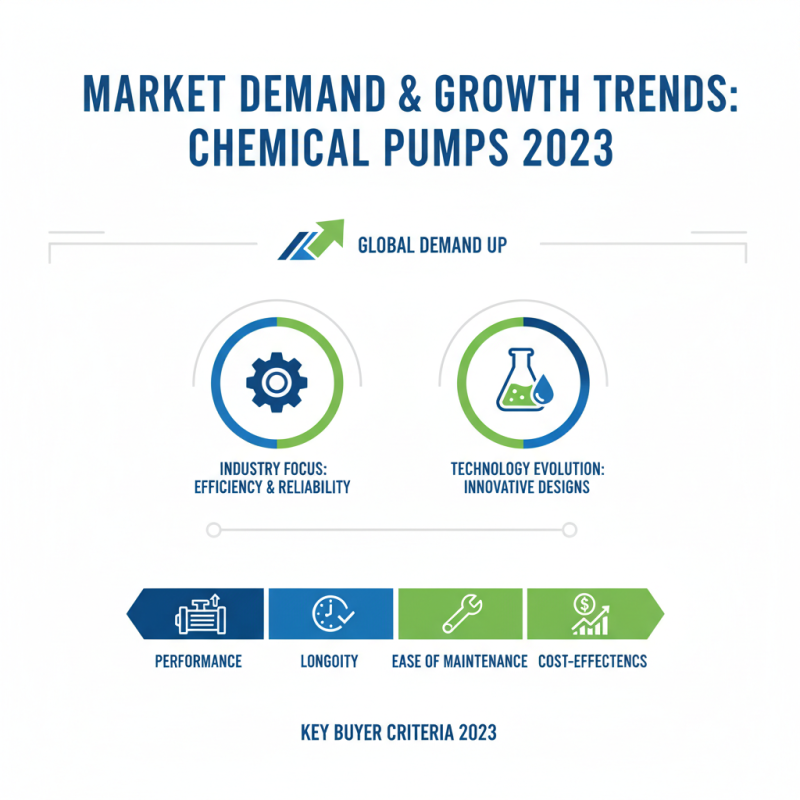
Chemical pumps are crucial in various industries. As we observe 2023, market demand for these pumps continues to rise. Industries are focusing on efficiency and reliability. This increased need emphasizes the evolution of pump technology. Innovative designs are becoming more common. Buyers are looking for performance, longevity, and ease of maintenance.
Growth trends show a shift towards environmentally friendly solutions. Many companies are adopting sustainable practices. This leads to higher investments in advanced pump systems. Safety remains a priority, especially when handling hazardous chemicals. However, some users voice concerns about maintenance costs and downtime. Education on proper usage becomes vital to address these issues.
As global industries adapt to demands, the diversity of chemical pump types plays a critical role. Buyers benefit from a range of options suited for specific tasks. However, not all pumps meet every requirement perfectly. Hence, understanding each type's strengths and weaknesses is essential for informed decisions.
Comparative Analysis of Material Compatibility for Various Pump Types
When considering chemical pumps, material compatibility is vital. Different pump types interact uniquely with various chemicals. For instance, thermoplastic pumps often excel in handling corrosive fluids. According to industry reports, nearly 60% of pump failures stem from material incompatibility. A thorough understanding of materials can prevent costly downtime.
Tip: Always consult compatibility charts before selecting a pump. They provide essential information on how different materials react to specific chemicals.
Metal pumps, while robust, can suffer from oxidation and wear. This is especially true in harsh environments. Proper maintenance and regular inspections can mitigate these risks. It’s crucial to identify potential weaknesses early.
Tip: Implement a routine checks schedule to assess material integrity. This proactive approach can save significant expenses in repairs.
Regulatory and Safety Standards Impacting Chemical Pump Selection
When selecting chemical pumps, regulatory and safety standards play a crucial role. Various industries face specific guidelines that dictate pump specifications. Standards such as ISO, API, and ANSI provide frameworks to ensure safety and reliability in operations. Each standard addresses unique factors like material compatibility and leakage prevention.
Compliance with these regulations is vital for operational safety. Non-compliance can result in significant penalties or operational failures. Therefore, understanding local and global regulations is essential for chemical pump selection. Buyers should conduct thorough research or consult experts familiar with these standards.
While many manufacturers claim adherence to regulations, not all offer transparency. It’s crucial to review documentation and certifications carefully. Assessing a pump’s design for potential weaknesses adds another layer of safety. Buyers might discover that some widely recommended options still fall short in specific applications. A well-informed choice will ultimately lead to safer operations and better long-term performance.
Top 10 Chemical Pump Types for Global Buyers