Steam is often invisible until a boiler starts losing efficiency, producing wet steam, or needing frequent cleaning. The U.S. Department of Energy’s Improving Steam System Performance: A Sourcebook for Industry describes steam as a major energy carrier and notes that steam systems can account for roughly 30% of energy use in some manufacturing facilities. That figure varies by site, but it shows why boiler water deserves careful attention. A thin layer of scale on a tube may look harmless; it can impede heat transfer and contribute to overheating.
Steam boiler water treatment manages feedwater and boiler water chemistry to limit scale, corrosion, and carryover. It may involve softening or other pretreatment, chemical dosing, monitoring, and controlled blowdown. The right approach depends on boiler pressure, makeup-water quality, operating load, and the manufacturer’s limits. ASME’s Consensus on Operating Practices for the Control of Feedwater and Boiler Water Chemistry in Modern Industrial Boilers provides industry guidance for establishing chemistry controls. Operators still need site-specific testing and competent oversight.
Small changes matter. A drifting conductivity reading, a leaking sample cooler, or a missed test can signal trouble before it becomes visible. Treatment is not a one-time fix, and no program removes every risk. That is easy to overlook. Reliable records, routine sampling, and qualified review help connect water chemistry with real boiler conditions—and support safer, steadier operation.
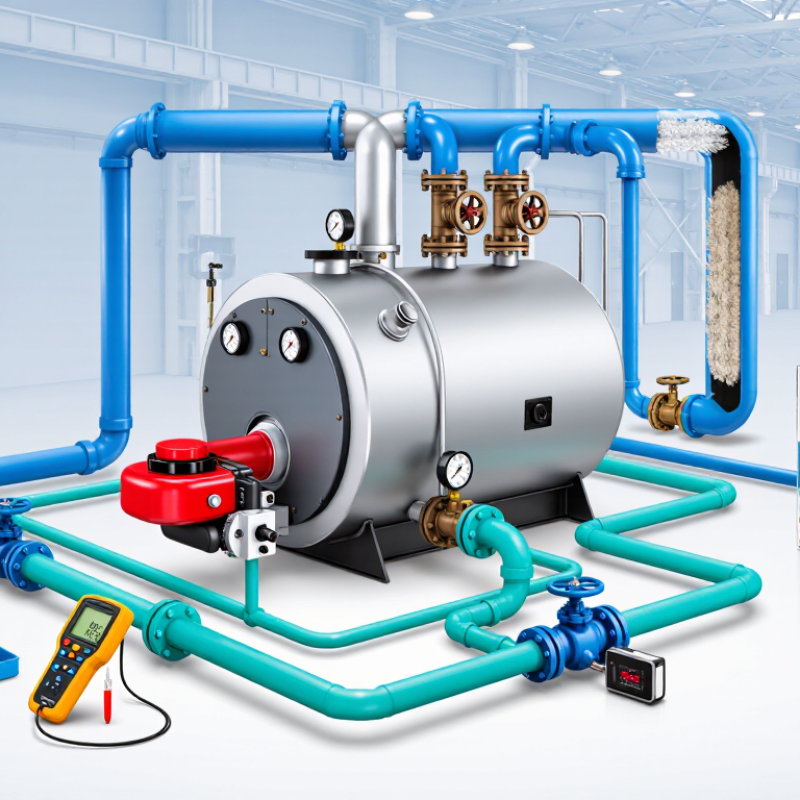
Steam boiler water treatment is the controlled management of feedwater and boiler water to limit scale, corrosion, and carryover. It begins with testing the incoming water for hardness, dissolved solids, oxygen, and pH. Based on the boiler’s pressure and makeup water, operators may use softening or membrane treatment, chemical dosing, and scheduled blowdown. There is no universal recipe.
The U.S. Department of Energy’s Improving Steam System Performance: A Sourcebook for Industry reports that steam systems account for about 30% of energy used in U.S. manufacturing. That figure describes steam systems broadly, not treatment savings, but it shows why preventable fouling matters. Even a thin mineral layer can impede heat transfer. Small changes matter. Operators track conductivity, chemical residuals, and water levels, then compare readings with equipment-specific limits and treatment guidance.
At the plant, a treatment check might mean collecting a cooled sample, recording conductivity, and inspecting the blowdown line for deposits. Results should be read alongside makeup-water changes and boiler logs; one number rarely tells the whole story. It is easy to over-trust a single reading. A clear sample cannot rule out hidden scale, and excessive chemical dosing can create its own operating problems. Treatment plans need routine review, especially after repairs or changes in water supply.
Steam Boiler Water Treatment: Why Boiler Water Requires Treatment
Boiler water carries dissolved minerals, oxygen, and other impurities into a hot, pressurized system. As water evaporates, dissolved solids become more concentrated. They can form hard scale on heat-transfer surfaces, where even a thin deposit can impede heat movement. Deposits are not always obvious from outside the boiler. Corrosion can also thin metal over time, while water carried into steam may affect downstream equipment and process quality. Small changes matter.
The U.S. Department of Energy’s Steam Tip Sheet #9, Minimize Boiler Blowdown, reports that typical boiler blowdown ranges from 4% to 8% of feedwater, and can reach 10% when feedwater quality is poor. Blowdown removes concentrated impurities, but excessive blowdown also wastes heated water and energy. Treatment helps control hardness, alkalinity, dissolved oxygen, and solids; the right program depends on feedwater analysis, operating pressure, and boiler design. A convenient chemical dose is not a substitute for testing. Real systems are less tidy than a chart.
Tips: Test feedwater and boiler water on a consistent schedule. Check trends, not just single readings. Confirm treatment and blowdown settings with a qualified water-treatment professional, especially after a change in feedwater source.
| Water Quality Factor | Why It Matters | Common Treatment or Control | Typical Monitoring |
|---|---|---|---|
| Hardness (calcium and magnesium) | Hardness minerals can form scale on heat-transfer surfaces. Scale reduces heat transfer and can contribute to overheating and tube damage. | Soften or demineralize incoming water as appropriate; use internal treatment where specified for the boiler. | Feedwater and condensate hardness tests; review softener or demineralizer performance. |
| Dissolved oxygen and carbon dioxide | These gases can cause corrosion in feedwater lines, the boiler, and condensate-return systems. | Use deaeration and, when required, oxygen-scavenging or condensate-treatment chemicals selected for the system. | Check deaerator operation and test dissolved oxygen or treatment residuals according to the water-treatment program. |
| pH and alkalinity | Water that is too acidic or insufficiently controlled can promote corrosion. Excessive alkalinity can contribute to foaming or carryover in some conditions. | Adjust treatment to maintain the operating range specified for the boiler, pressure, and materials. | Measure feedwater, boiler-water, and condensate pH; check alkalinity where applicable. |
| Dissolved and suspended solids | Solids become concentrated as steam is generated. High concentrations can cause deposits, foaming, priming, or wet steam. | Control solids through suitable pretreatment and scheduled surface or bottom blowdown. | Track boiler-water conductivity or total dissolved solids and inspect blowdown control. |
| Iron, copper, and other corrosion products | Corrosion products can deposit on heat-transfer surfaces, restrict flow, and indicate corrosion elsewhere in the system. | Control corrosion at its source; maintain condensate return and chemical treatment, and filter or remove contaminants where suitable. | Analyze feedwater and condensate for iron or copper when system conditions warrant. |
| Oil and organic contamination | Oil and other contaminants can cause foaming, unstable water levels, poor heat transfer, or contaminated steam. | Prevent contamination, identify its source, and use appropriate separation or pretreatment. Do not rely on routine chemical dosing alone. | Inspect condensate returns and investigate sudden changes in foaming, conductivity, or steam quality. |
| Feedwater temperature and condensate return | Warm feedwater reduces the temperature difference the boiler must supply. Returning clean condensate can conserve treated water and energy. | Recover suitable condensate and maintain feedwater-heating and deaeration equipment. | Monitor feedwater temperature, condensate-return rate, and return-water quality. |
Treatment requirements and acceptable water-quality limits depend on boiler pressure, design, materials, and operating conditions. Follow the boiler manufacturer’s guidance and applicable water-treatment standards.
Steam boiler water treatment starts with identifying what enters the feedwater. Hardness minerals, mainly calcium and magnesium, can form deposits on hot tubes. These deposits slow heat transfer and may create localized overheating. Small layers matter. Dissolved oxygen can attack steel, causing pits that deepen beneath the waterline. Carbon dioxide can also form corrosive carbonic acid in condensate lines. Silica and suspended solids may travel with steam, contaminating equipment downstream. Clear water is not necessarily clean water.
The U.S. Department of Energy’s Steam Tip Sheet #9 reports that a boiler operating at 200 psig may need blowdown equal to roughly 4–8% of feedwater when makeup water is softened; untreated makeup can push the rate toward 10%.
That range shows how water quality affects operation, though each boiler needs testing against its pressure and treatment program. Excess dissolved solids raise foaming and carryover risk; excessive blowdown, meanwhile, discards hot water and treatment chemicals.
I still find one detail easy to overlook: a sample taken at the wrong point can hide changing conditions. Regular checks for hardness, conductivity, oxygen, and silica help connect visible deposits or corrosion to their likely causes.
Steam boiler water treatment removes impurities that can cause scale, corrosion, foaming, or carryover. The process begins with testing the incoming water for hardness, alkalinity, dissolved solids, and oxygen. Operators then select pretreatment, such as filtration or softening, to reduce the contaminants most likely to damage equipment. Where feedwater quality demands it, reverse osmosis can further reduce dissolved minerals. The right combination depends on the water source and boiler operating conditions.
Next, a deaerator or chemical oxygen scavenger helps limit corrosion inside the feedwater system. Chemical conditioning controls remaining hardness and alkalinity, while routine testing checks whether treatment is working. Blowdown removes concentrated dissolved solids from the boiler. The U.S. Department of Energy’s Steam Tip Sheet #9 reports that blowdown commonly accounts for 4–8% of feedwater, and may reach 10%. Too little can concentrate solids; too much wastes treated water and heat. Targets should be set using boiler guidance and regular measurements, not guesswork.
Tips: Take samples consistently, and record the results. A clear sample is not proof of safe chemistry. Small details matter. Review test trends with a qualified water-treatment professional, especially after changes in feedwater or boiler load. No treatment plan is perfect; missed tests and shifting water quality can expose gaps. Then test again.
Steam boiler water treatment depends on routine checks, not a one-time chemical dose. Operators track conductivity, pH, hardness, alkalinity, and dissolved oxygen in feedwater and boiler water. These readings reveal changing conditions: for example, rising conductivity can signal that dissolved solids are concentrating. Sample points should be flushed, and hot samples cooled before testing. Small details matter.
Monitoring works best when readings are compared with pressure-specific operating limits and past results. The U.S. Department of Energy’s Steam Tip Sheet #9, “Minimize Boiler Blowdown,” reports that blowdown commonly ranges from 4% to 8% of feedwater, and may reach 10%. Conductivity controls can help manage blowdown, but a sensor alone cannot confirm every water-quality issue. Staff should verify unusual readings with a suitable test, then adjust treatment or blowdown gradually. There is no magic number. A missed sample can hide a slow change, and even a tidy log may not explain its cause.
Tips: Keep a dated log beside the test station. Record results, dosing changes, and blowdown settings together. If readings drift, check the sample line and instrument before changing chemical feed. Recheck after adjustment. Don’t guess.